

"Most e-commerce demos are a homepage and a promise. We built the whole store — eight pages, a working cart, faceted filtering, English and Arabic — so the question stops being whether we can and starts being when."

 Overview
A storefront is not a page, it is a system — a catalogue, a way to narrow it, a cart that remembers, and a checkout path that never loses the customer. So we invented a Dubai consumer-electronics retailer and built the whole thing: eighteen products with real specifications, faceted filters with live counts, persistent cart, product pages, blog and brand index, in English and Arabic, on a dark emerald interface.
What it demonstrates
Pages, all working
Storefront mirrored for RTL
Entire image set, WebP
Screens
Screenshots of the live build — not mockups. Each one is the running site at 1440×900.
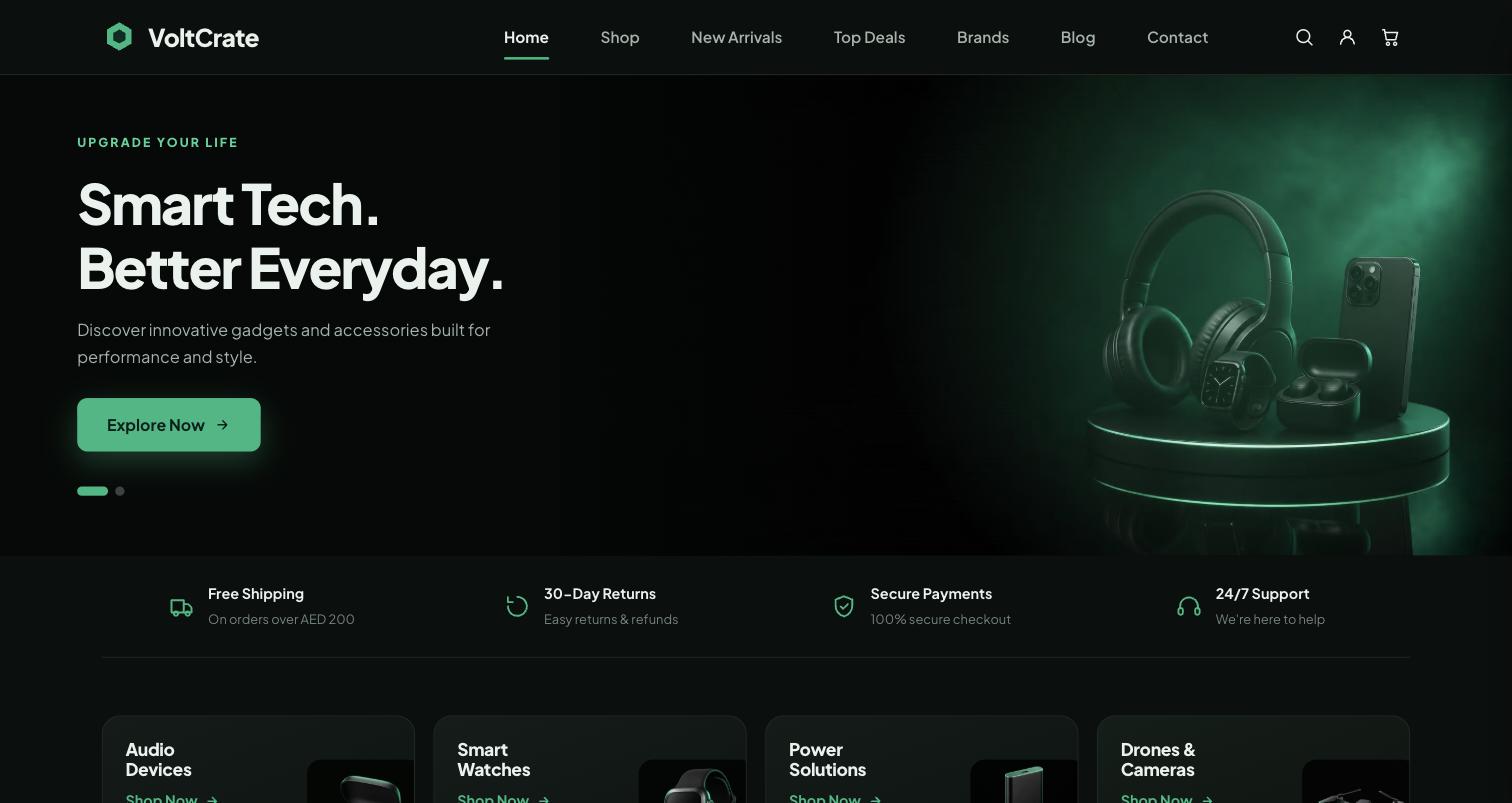
A rotating hero over commissioned product artwork, the promise strip beneath it, and category tiles that feed straight into the shop’s filters.
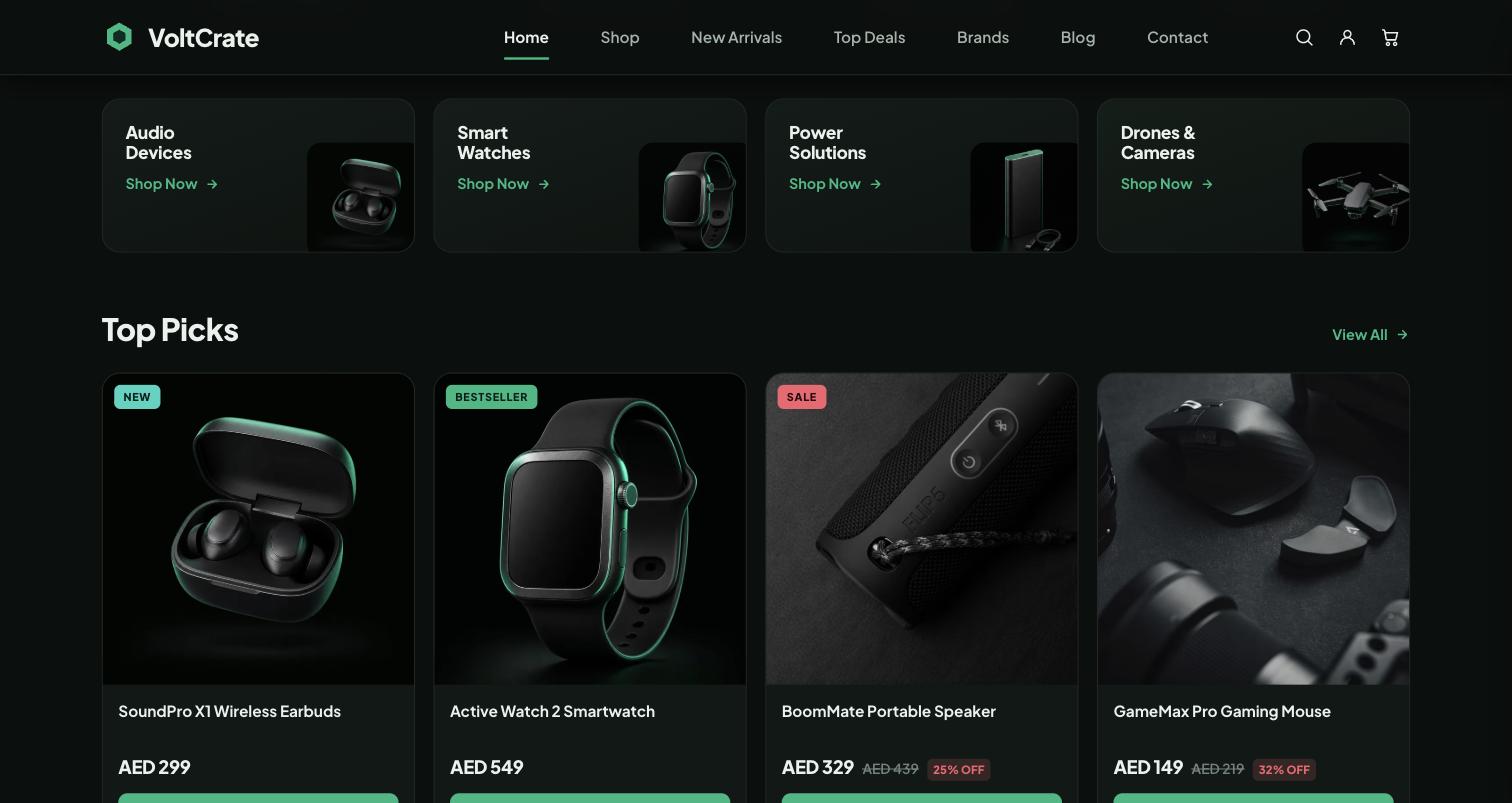
Four category routes and a curated rail carrying NEW, BESTSELLER and SALE badges, with live AED pricing and the discount worked out against the struck-through original.
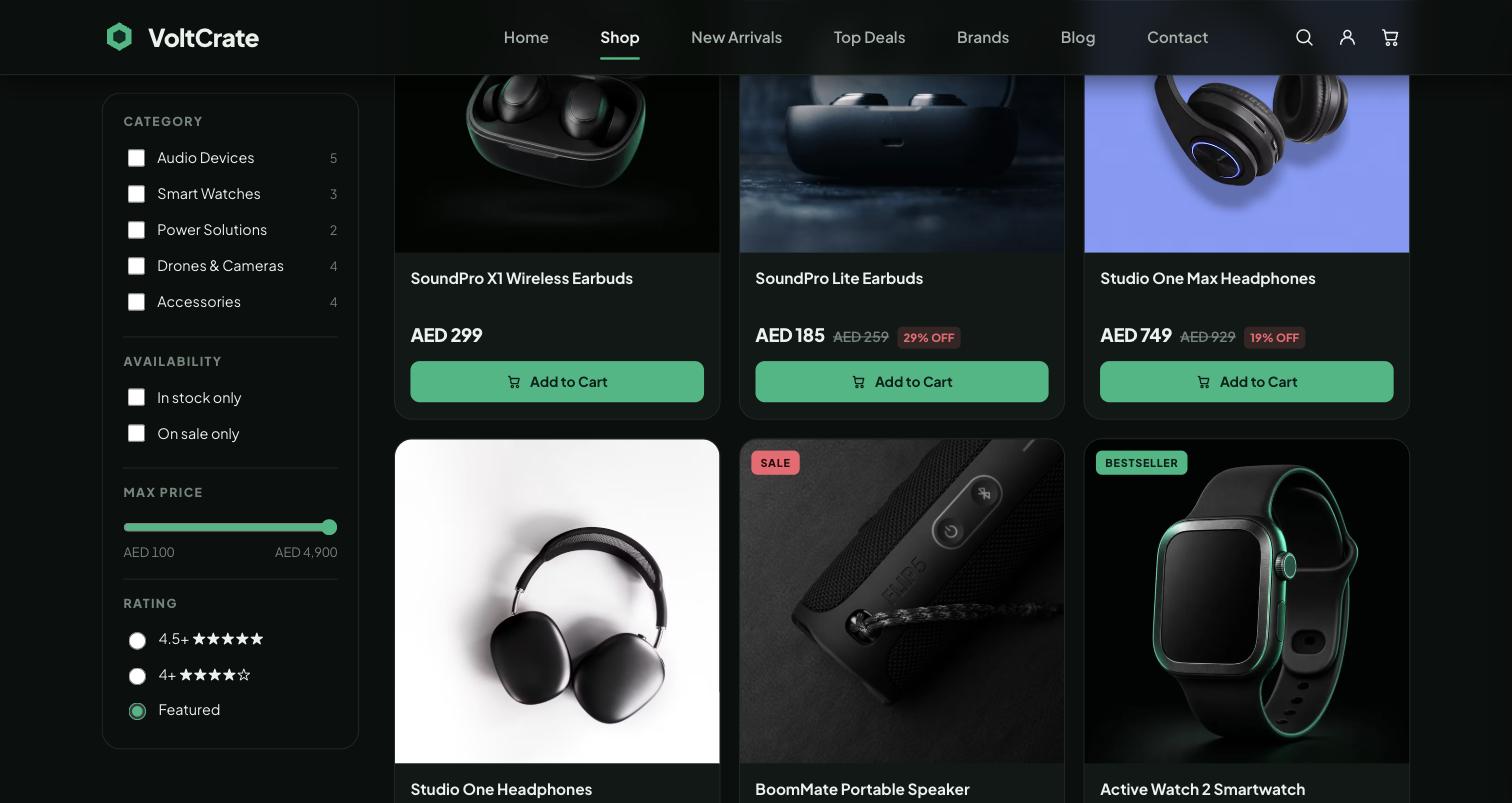
Category, availability, price and rating filters, each showing a live count that recalculates as the result set narrows. Every filter state is a shareable URL.
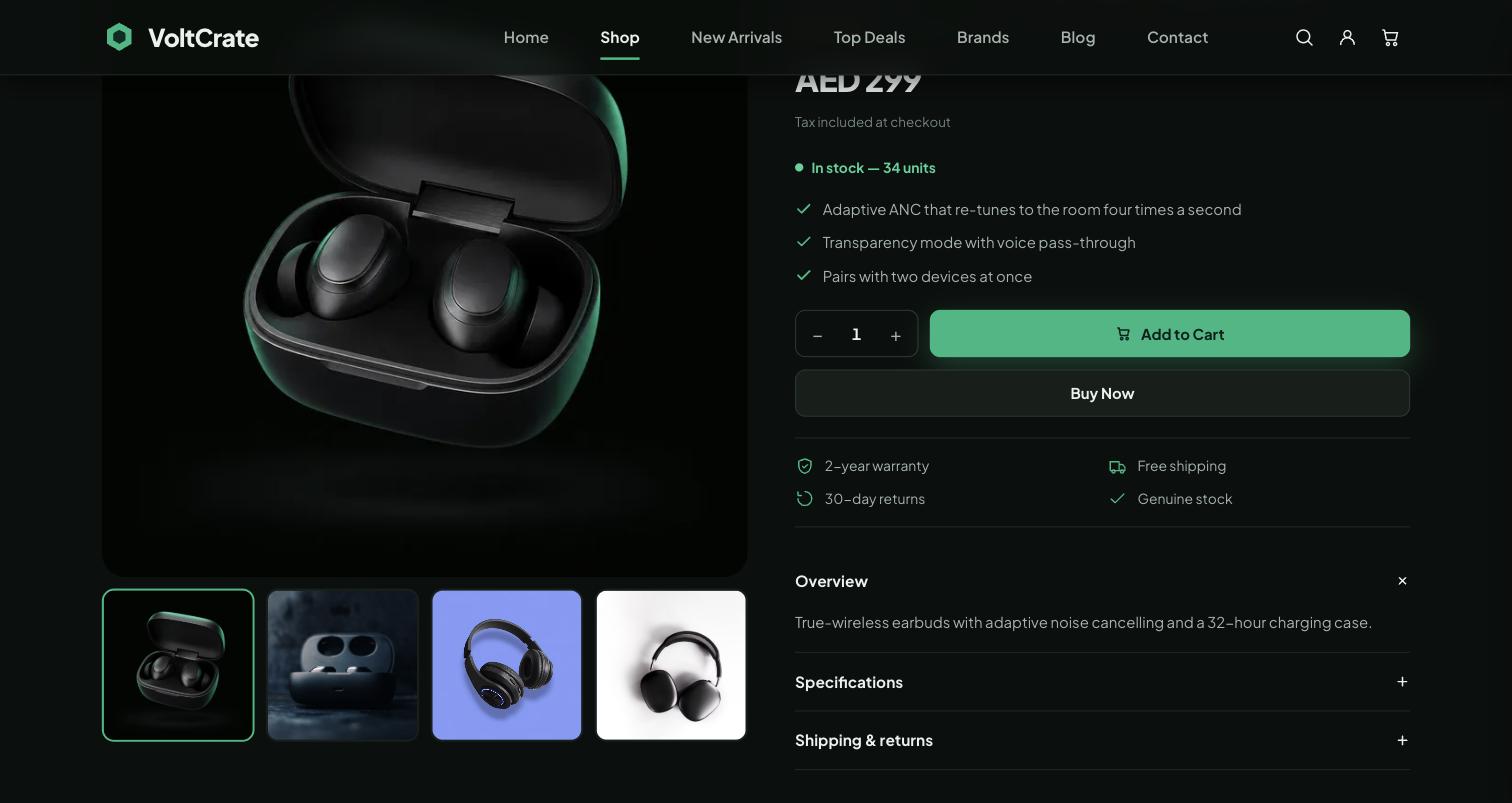
Thumbnail gallery with cursor-tracked zoom, real stock count, a quantity stepper and collapsible specification panels — plus a related-products rail derived from the same data file.
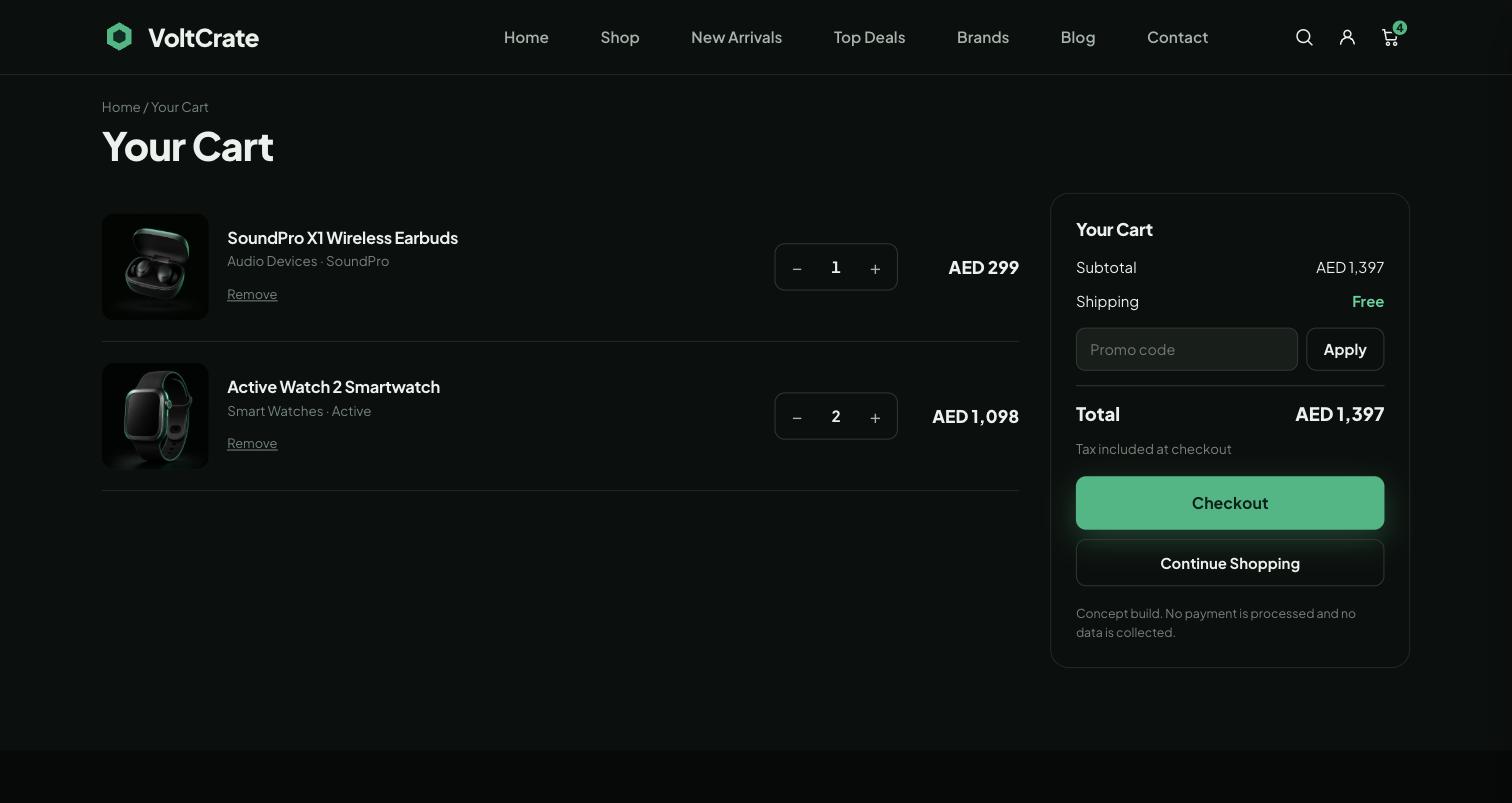
Persisted to local storage, so it survives a refresh and follows the customer between pages. The header badge, the slide-out drawer and this page all read one source of truth.
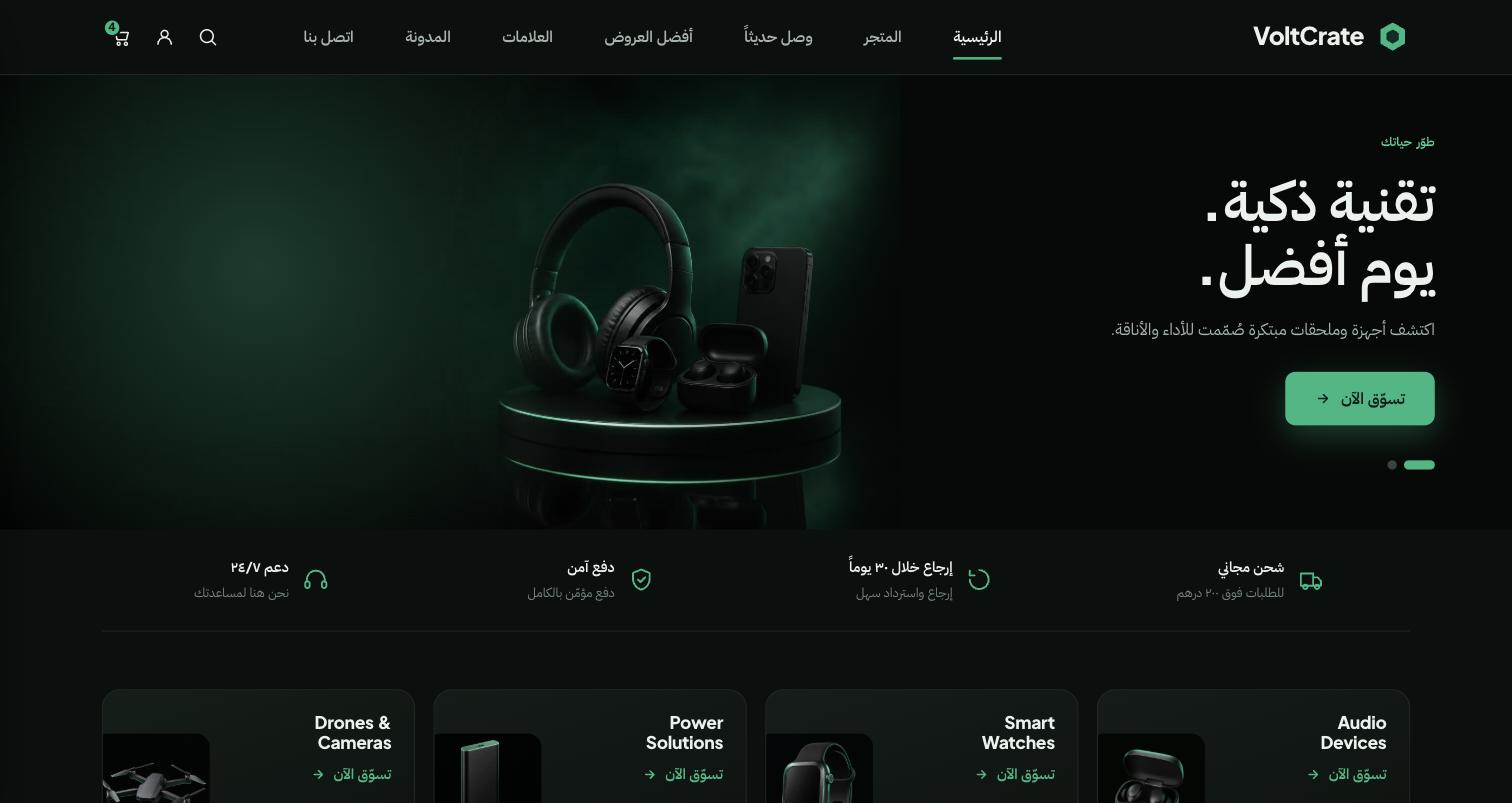
Not a translation layer. Logical CSS properties flip the entire storefront — navigation, hero, badges, filter rail and numerals — rather than patching a left-to-right layout.
How it was built
The catalogue is one data file, and everything else derives from it — the filter counts, the sort orders, the related-products rail, the deep links that let a category or a brand be shared as a URL. The cart persists to local storage, so it survives a refresh and follows the customer across pages, with the drawer, the cart page and the header badge all reading from a single source of truth. Product photography was commissioned as a matched set, emerald rim light on near-black, then converted to WebP — 4.3 MB of source renders down to 251 KB shipped. Every layout property is logical rather than physical, so Arabic mirrors the whole storefront instead of patching it, and the interface was checked against WCAG AA on every text pairing before it shipped.
Note: VoltCrate is a self-initiated concept build. The retailer, its products, prices and stock levels are fictional and nothing is offered for sale. It exists to demonstrate e-commerce engineering and interface design.
* Whether you have a question or want to discuss a project, the team at
GOAT Technologies is here — USA head office, Dubai branch. Fill the form below!